- News
- Understanding Disability: Breaking Stereotypes and Myths
- RCIL News
Understanding Disability: Breaking Stereotypes and Myths
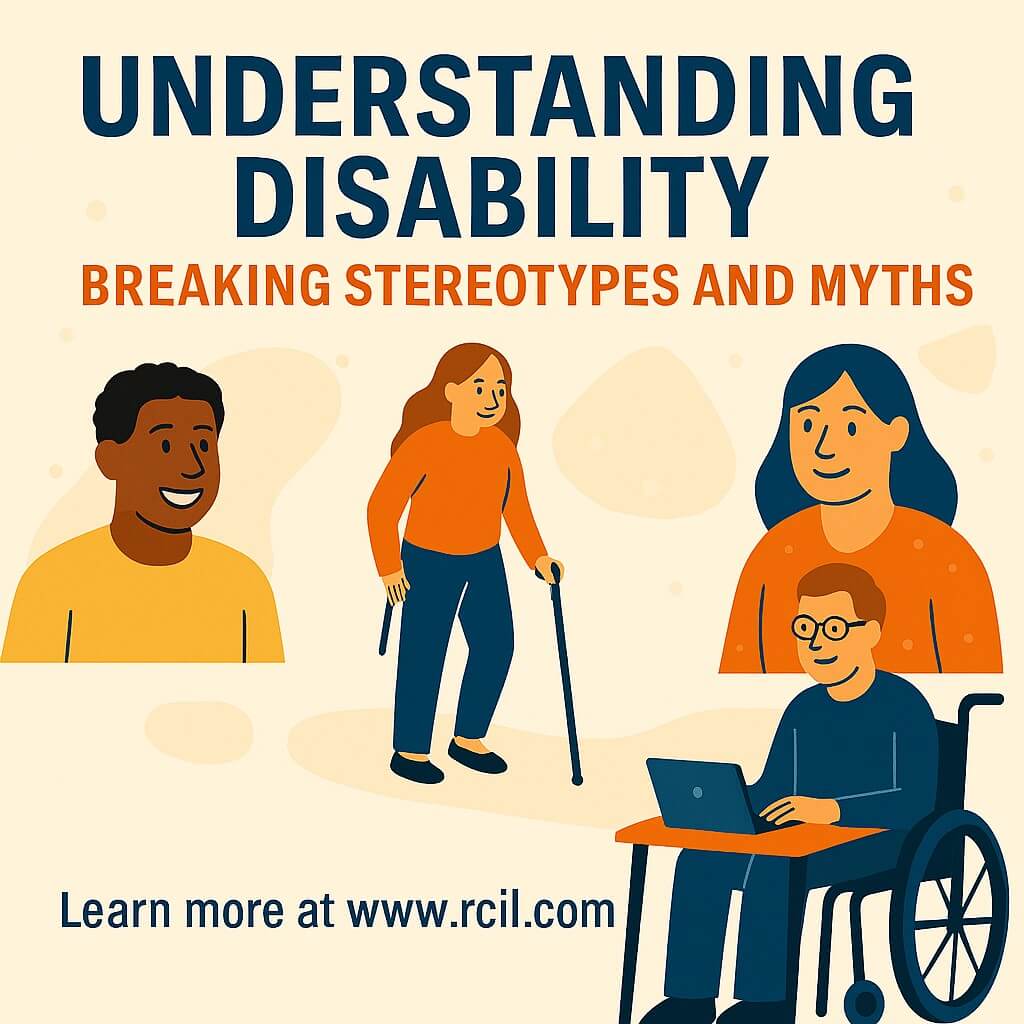
When people talk about disability, misconceptions can often overshadow reality. These stereotypes can create barriers—social, emotional, and physical—that prevent people with disabilities from living fully inclusive lives. At RCIL, we believe that understanding disability is the first step toward breaking these myths and fostering a community built on respect and equality.
Common Myth: Disability Defines a Person
One of the most common misconceptions is that a disability defines who someone is. In truth, disability is just one aspect of a person’s identity. People with disabilities have diverse talents, interests, and aspirations—just like anyone else. Focusing solely on a disability overlooks the individual’s strengths, potential and individuality.
Common Myth: People with Disabilities Always Need Help
While some individuals may require support, many live independently, work, and contribute actively to their communities. Programs like RCIL’s Self-Direction empower individuals to make choices about their lives, proving that independence is not only possible but thriving.
Common Myth: Disabilities Are Always Visible
Not all disabilities can be seen. Conditions such as epilepsy, chronic pain, or mental health challenges are often invisible, yet they impact daily life. Recognizing this helps us move beyond assumptions and treat everyone with empathy and understanding.
Common Myth: People with Disabilities Can’t Work
This stereotype is not only false, it’s harmful. People with disabilities bring unique perspectives and skills to the workplace. Inclusive hiring practices benefit businesses and communities alike, creating environments where everyone can succeed.
Breaking Barriers Together
Education and awareness are powerful tools for change. By challenging stereotypes and embracing inclusion, we can create a society where everyone has equal opportunities to thrive. At RCIL, we’re committed to advocating for accessibility, independence, and respect for all.