- News
- Why Accessibility Is a Human Right: Breaking Down Barriers…
- RCIL News
Why Accessibility Is a Human Right: Breaking Down Barriers in Public Spaces and Online
Imagine navigating a world where simple tasks—entering a building, reading a website, joining a conversation—are out of reach. For millions of people with disabilities, this isn’t hypothetical; it’s reality. Accessibility isn’t about adding convenience for a few—it’s about ensuring equity for all. When barriers exist in physical or digital spaces, they don’t just block access; they block opportunity, independence, and dignity.
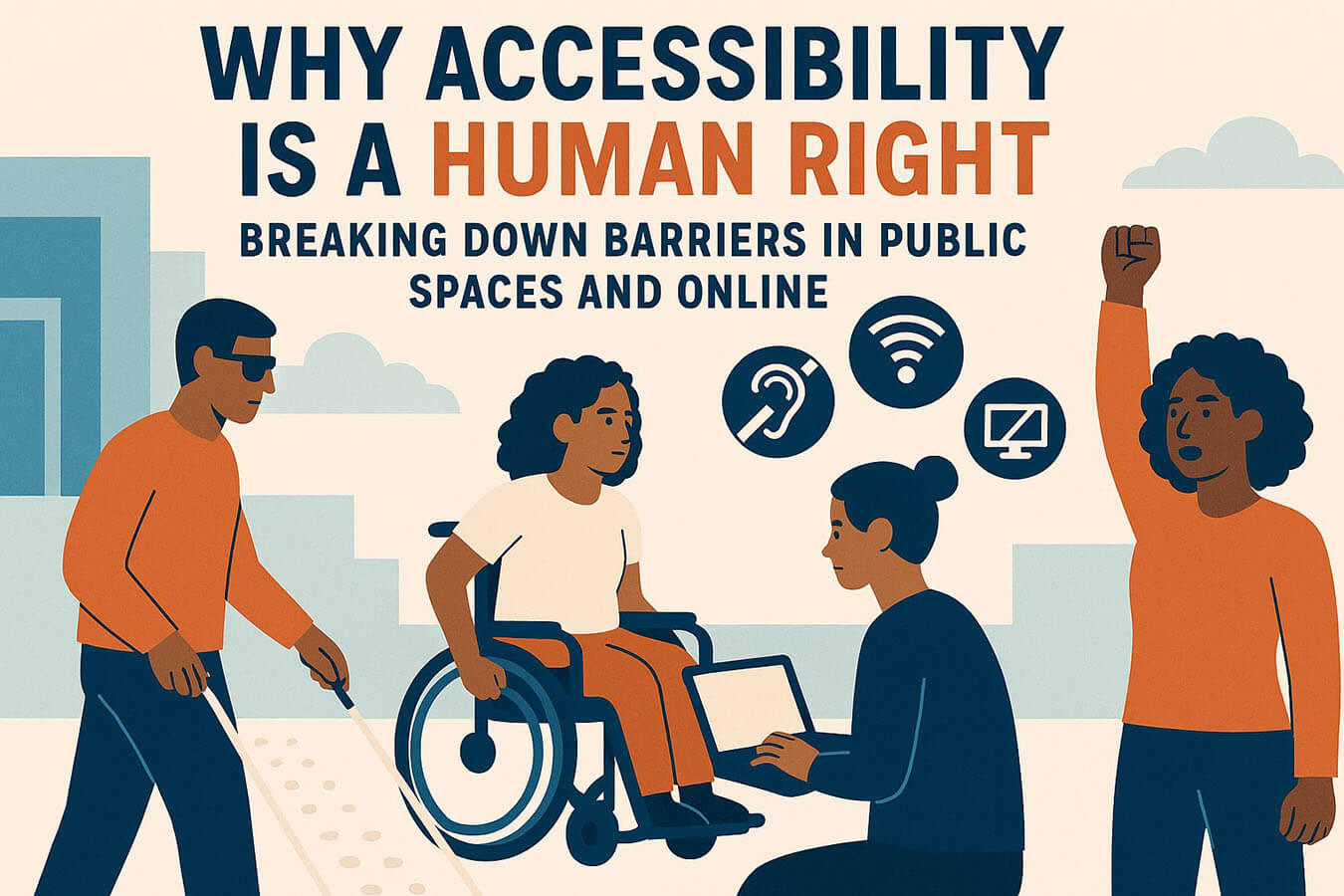
Accessibility isn’t just a convenience—it’s a fundamental right for everyone.
When people with disabilities face barriers in public spaces or online, it limits their ability to participate fully in society. This isn’t just an issue of design; it’s an issue of equity and justice.
What Does Accessibility Really Mean?
Accessibility ensures that everyone, regardless of ability, can navigate and interact with the world around them. This includes:
- Physical spaces: Ramps, elevators, tactile signage, and accessible restrooms.
- Digital spaces: Websites, apps, and documents that meet standards like WCAG (Web Content Accessibility Guidelines).
Why It Matters
- Equal Opportunity: Without accessibility, people are excluded from education, employment, and civic engagement.
- Legal and Ethical Responsibility: Laws like the Americans with Disabilities Act (ADA) exist because accessibility is a right, not a privilege.
- Community Benefits: Inclusive design helps everyone—think curb cuts for wheelchairs that also help parents with strollers.
Breaking Down Barriers
- In Public Spaces: Advocate for universal design in parks, schools, and workplaces.
- Online: Push for alt text on images, captions on videos, and keyboard-friendly navigation.
How RCIL Supports Accessibility
At RCIL (Resource Center for Independent Living), we believe accessibility is the foundation of independence and inclusion. Our programs and services help individuals with disabilities live fully and participate in their communities. From advocacy and education, RCIL works to break down.
How You Can Help
- Check your organization’s spaces and digital platforms for accessibility.
- Educate your team about inclusive practices.
- Support policies that enforce accessibility standards.
- Partner with organizations like RCIL to promote accessibility and independence.
The Bottom Line
Accessibility is about dignity, independence, and equality. When we remove barriers, we create a world where everyone belongs. Contact us to learn more about how RCIL can help your organization become more accessible.