- News
- National Stroke Awareness Month: Know the Signs, Save a Life
- RCIL News
National Stroke Awareness Month: Know the Signs, Save a Life
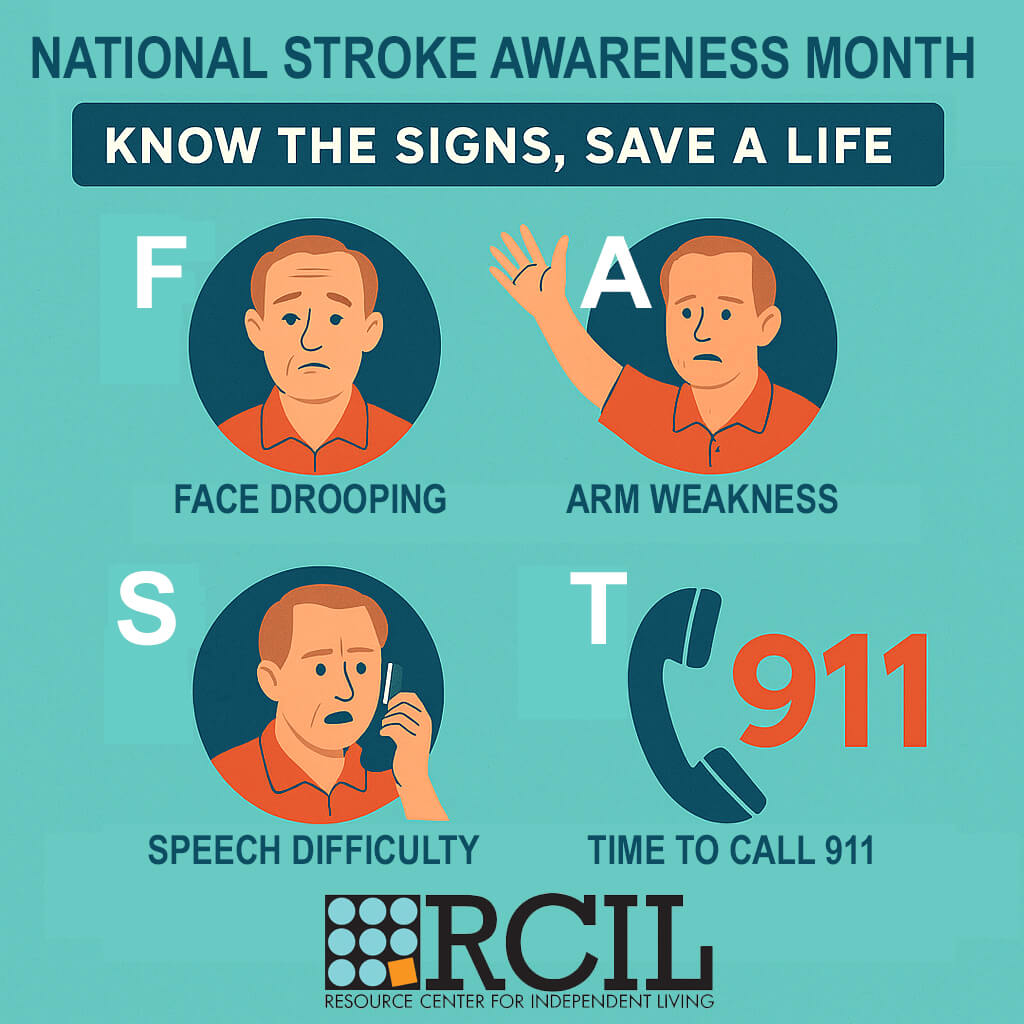
Every May, National Stroke Awareness Month reminds us of a powerful truth: stroke can happen to anyone, at any time—but recognizing the warning signs quickly can save lives and reduce long-term disability. At RCIL, we are committed to empowering individuals and families with the knowledge and resources they need to stay safe, independent, and healthy.
What Is a Stroke?
A stroke occurs when blood flow to the brain is interrupted, either by a blockage (ischemic stroke) or a ruptured blood vessel (hemorrhagic stroke). Without oxygen-rich blood, brain cells begin to die within minutes. This is why a stroke is a medical emergency. And every second counts.
Know the Signs: Think F.A.S.T.
The easiest way to remember the warning signs of a stroke is the acronym F.A.S.T.:
- F – Face Drooping: One side of the face may droop or feel numb. Ask the person to smile.
- A – Arm Weakness: One arm may be weak or numb. Ask them to raise both arms.
- S – Speech Difficulty: Speech may be slurred or hard to understand.
- T – Time to Call 911: If you notice any of these signs, call emergency services immediately.
Other symptoms may include sudden confusion, trouble seeing, dizziness, or a severe headache with no known cause. By familiarizing yourself with F.A.S.T., you’ll be more prepared to act fast and potentially save a life.
Who Is at Risk?
Stroke risk increases with age, but it can affect people of all backgrounds. Certain factors that could raise your risk include:
- High blood pressure
- Diabetes
- Smoking
- High cholesterol
- Obesity
- Sedentary lifestyle
The good news? Many of these risk factors are preventable or manageable with lifestyle changes and regular medical care.
Prevention Starts with You
Making small, consistent changes can significantly reduce your risk:
- Eat a balanced diet rich in fruits, vegetables, and whole grains
- Stay physically active
- Quit smoking and limit alcohol use
- Monitor blood pressure, cholesterol, and blood sugar levels
- Follow your healthcare provider’s recommendations
- At RCIL, we believe that accessible health education and support services are key to prevention and recovery.
Life After Stroke: Support and Independence
Recovering from a stroke can be challenging, but no one has to navigate it alone. Many survivors experience physical, cognitive, or communication difficulties. That’s where organizations like RCIL make a positive difference.
We provide:
- Independent living support and advocacy
- Peer counseling and community connections
- Resources for accessible housing and transportation
- Assistance navigating healthcare and support services
Our goal is to help individuals regain independence and improve their quality of life. If you or someone you know is struggling with independent living after a stroke, reach out to us! RCIL is here to help.
Spread Awareness, Share Knowledge
You can make a difference this month:
- Learn and share the F.A.S.T. warning signs
- Check in on loved ones, especially those at higher risk
- Encourage healthy habits in your community
- Participate in local awareness events
Every Second Matters
Stroke is a leading cause of long-term disability—but quick action and awareness can change outcomes. This National Stroke Awareness Month, take the time to learn, share, and act.
Because recognizing the signs of stroke could save a life—maybe even your own.