- News
- Tech Tools That Support Independent Living
- Independent Living Resources
Tech Tools That Support Independent Living
At RCIL, we believe everyone deserves the tools to live life on their own terms. Thanks to modern technology, individuals with disabilities have more ways than ever to stay safe, connected, and in control of their daily lives.
Living independently with a disability is not just a goal. It’s a right, and that right is at the core of RCIL’s mission.
Thanks to advances in assistive technology, more individuals are able to live on their own terms with tools that support independence, safety, accessibility, and connection. Whether you're navigating daily tasks, managing your health, communicating with others, or staying socially engaged, technology can provide additional tools for independent living.
Smart Home Technology for Independent Living
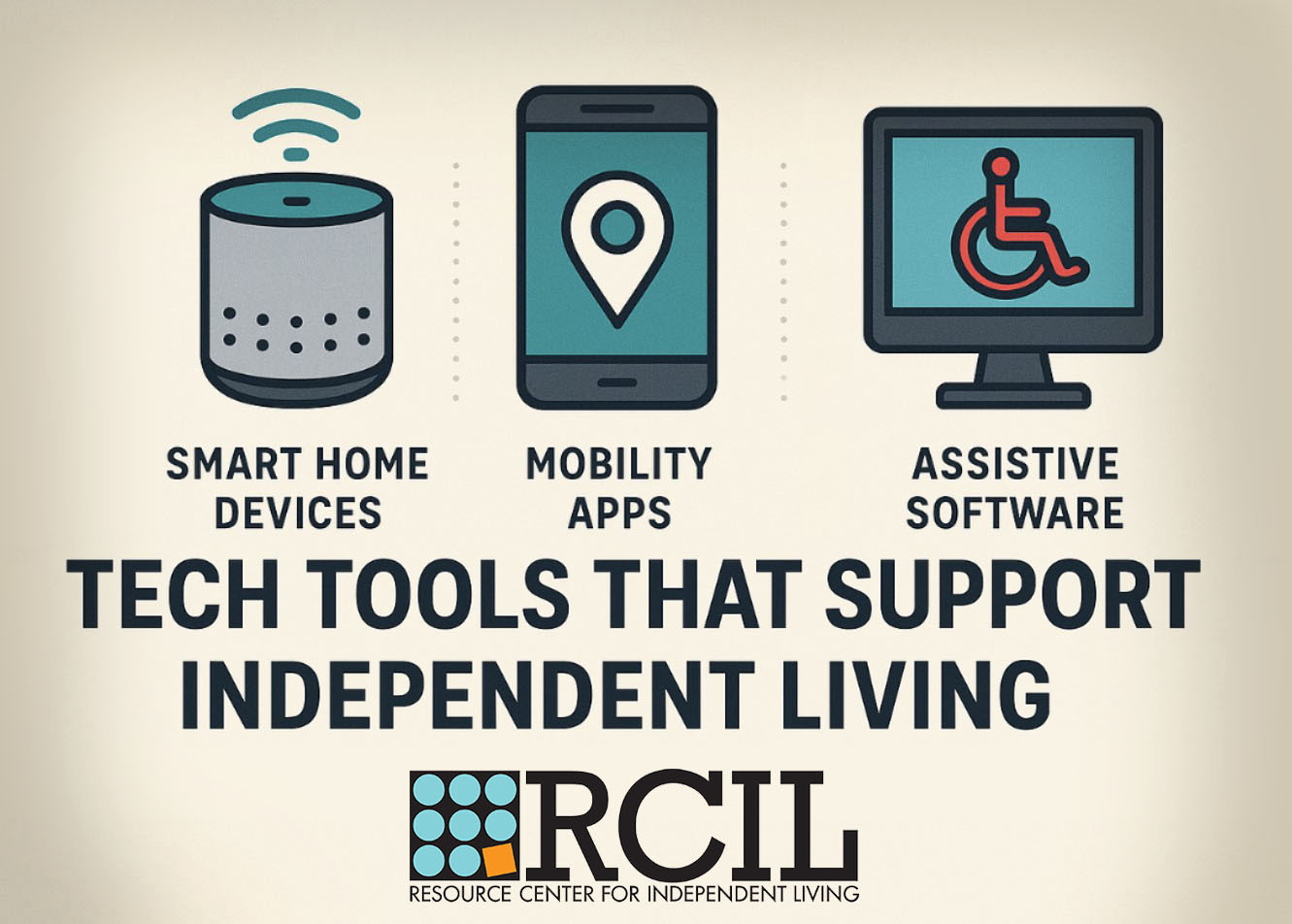
Smart home technology has revolutionized accessibility. Devices like smart speakers and connected home systems can allow individuals to control parts of their environment using voice commands, mobile apps, or automated routines.
Smart home technology can help with tasks such as:
- Controlling lights without needing to reach switches.
- Adjusting thermostats using voice commands or an app.
- Locking and unlocking doors with smart locks.
- Controlling appliances and electronics using smart plugs.
- Setting reminders and routines for everyday tasks.
These tools can make it easier for individuals with disabilities to control their home environment and complete everyday activities independently.
Mobility and Accessibility Technology
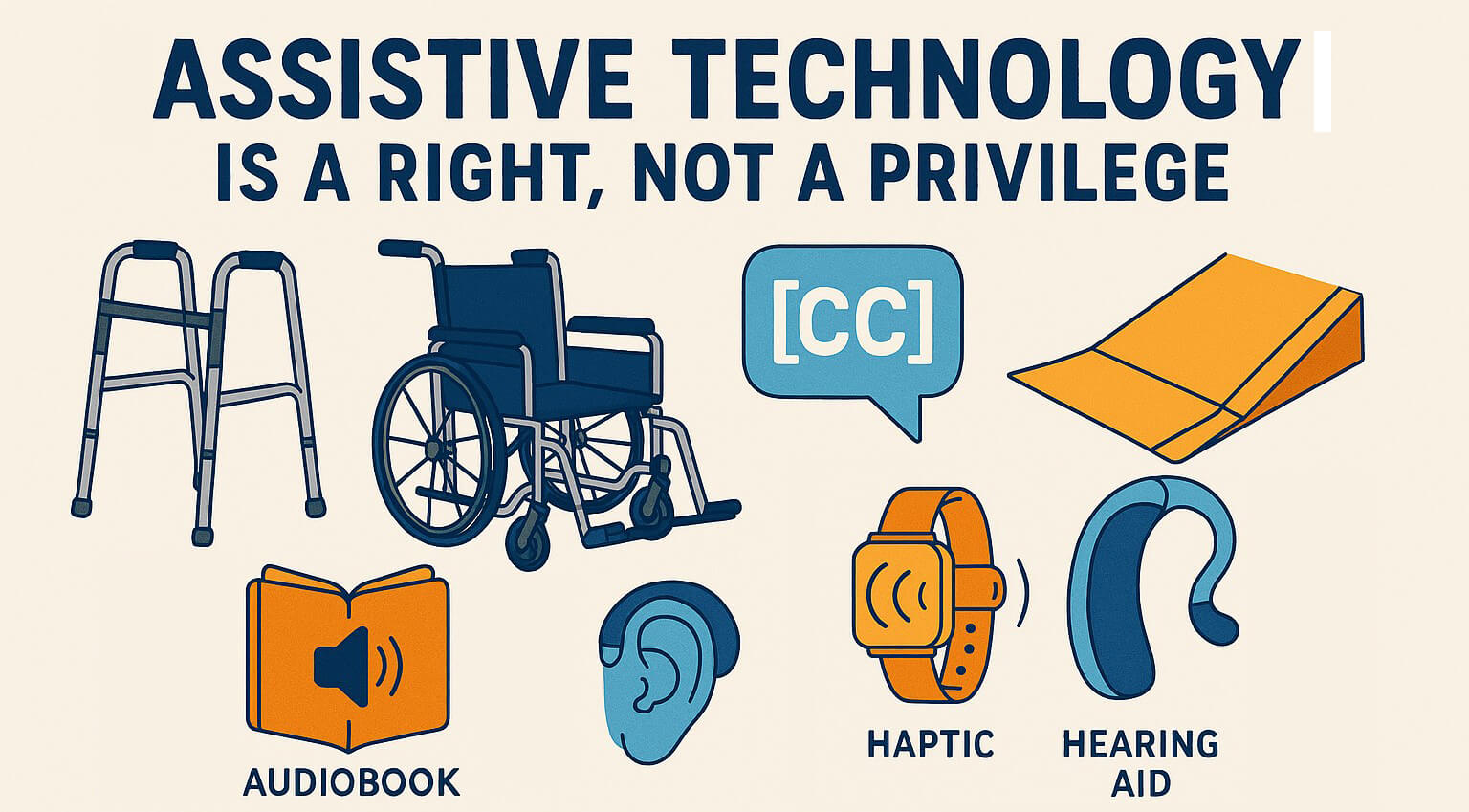
Mobility aids have gone digital. New technology can help individuals navigate their homes and communities with greater independence.
Examples include:
- Smart power wheelchairs, including models with app-based controls.
- Portable ramps that can improve access to homes and other spaces.
- Navigation apps that help identify accessible locations and routes.
- Accessible transportation apps that can help individuals plan trips and navigate their communities.
Mobility and accessibility technology can help remove barriers and make it easier for individuals to participate in work, recreation, appointments, and community activities.
Cognitive and Communication Aids
For individuals with cognitive or communication challenges, assistive technology can provide additional ways to communicate, organize daily activities, and complete everyday tasks.
Examples include:
- Speech-generating devices that support individuals who have difficulty communicating verbally.
- Reminder apps for appointments, medications, and daily activities.
- Visual scheduling tools that help organize routines and tasks.
- Text-to-speech and speech-to-text tools that provide alternative ways to read, write, and communicate.
The right technology depends on the individual, their goals, and the type of support they need.
Health and Wellness Technology
Managing health independently is easier with wearable devices, telehealth, and remote monitoring tools.
Examples include:
- Smartwatches and wearable devices that can track activity and other health information.
- Telehealth platforms for connecting with healthcare providers remotely.
- Medication reminder apps that can help individuals follow daily schedules.
- Fall detection and emergency alert systems that can provide an additional layer of support.
Technology should complement an individual's healthcare and support plan rather than replace professional medical guidance or personal assistance when it is needed.
Technology for Social and Community Connection
Staying connected can be an important part of independent living. Technology can help individuals maintain relationships, meet others with shared experiences, participate in activities, and stay involved in their communities.
Social media, video calls, online communities, and accessible communication platforms can help individuals:
- Stay connected with family and friends.
- Participate in peer support communities.
- Find local events and activities.
- Connect with disability advocacy organizations and resources.
- Build relationships with individuals who share similar interests and experiences.
Technology can provide another way for individuals with disabilities to build connections while participating in community life on their own terms.
Safety and Emergency Technology
Safety technology can provide additional tools for individuals who want to live more independently while staying connected to family members, caregivers, or emergency services when needed.
Examples include:
- GPS and location-sharing tools when an individual chooses to use them.
- Emergency alert systems with quick access to assistance.
- Fall detection devices that can identify potential emergencies.
- Smart doorbells and cameras that can help individuals monitor their homes.
- Smart smoke and carbon monoxide detectors that can provide alerts through multiple devices.
The right safety technology should reflect each individual's preferences, privacy, needs, and level of independence.
Finding the Right Assistive Technology
Assistive technology is not one-size-fits-all. The right tools depend on an individual's abilities, environment, goals, and personal preferences.
Before choosing a device or technology, consider:
- What task or barrier needs to be addressed?
- Is the technology easy for the individual to use?
- Does it work with other devices or assistive technology already being used?
- Can it be customized to the individual's needs?
- Does it support greater independence and choice?
Sometimes the most useful solution is advanced technology. Other times, a simple device or modification can make the biggest difference.
How RCIL Supports Independent Living
At RCIL, we believe assistive technology should support an individual's ability to make choices, overcome barriers, and live as independently as possible.
Through Independent Living Support, advocacy, information and referral, and other services, RCIL helps individuals with disabilities connect with resources that support their personal goals and independence.
Assistive technology can be one part of that journey. From smart home devices and mobility tools to communication aids and accessible digital technology, the right tools can help individuals have greater control over everyday life.
As technology continues to evolve, accessibility must remain at the forefront of design. By making technology more accessible and giving individuals the freedom to choose the tools that work for them, we can help create communities where everyone has greater opportunities to live independently.