- News
- Inclusive Hiring Practices: How Employers Can Build a Better…
- RCIL News
Inclusive Hiring Practices: How Employers Can Build a Better Workspace
Building a truly inclusive workforce starts long before someone is hired. It begins with the systems, expectations, and mindset employers bring to their hiring practices. Too often, barriers are built into job descriptions, applications, and interviews—not out of intent, but out of habit. By rethinking these processes, employers can open the door to a wider pool of talent and create workplaces where people of all abilities can thrive. Here’s why inclusive hiring matters—and how employers can do better.
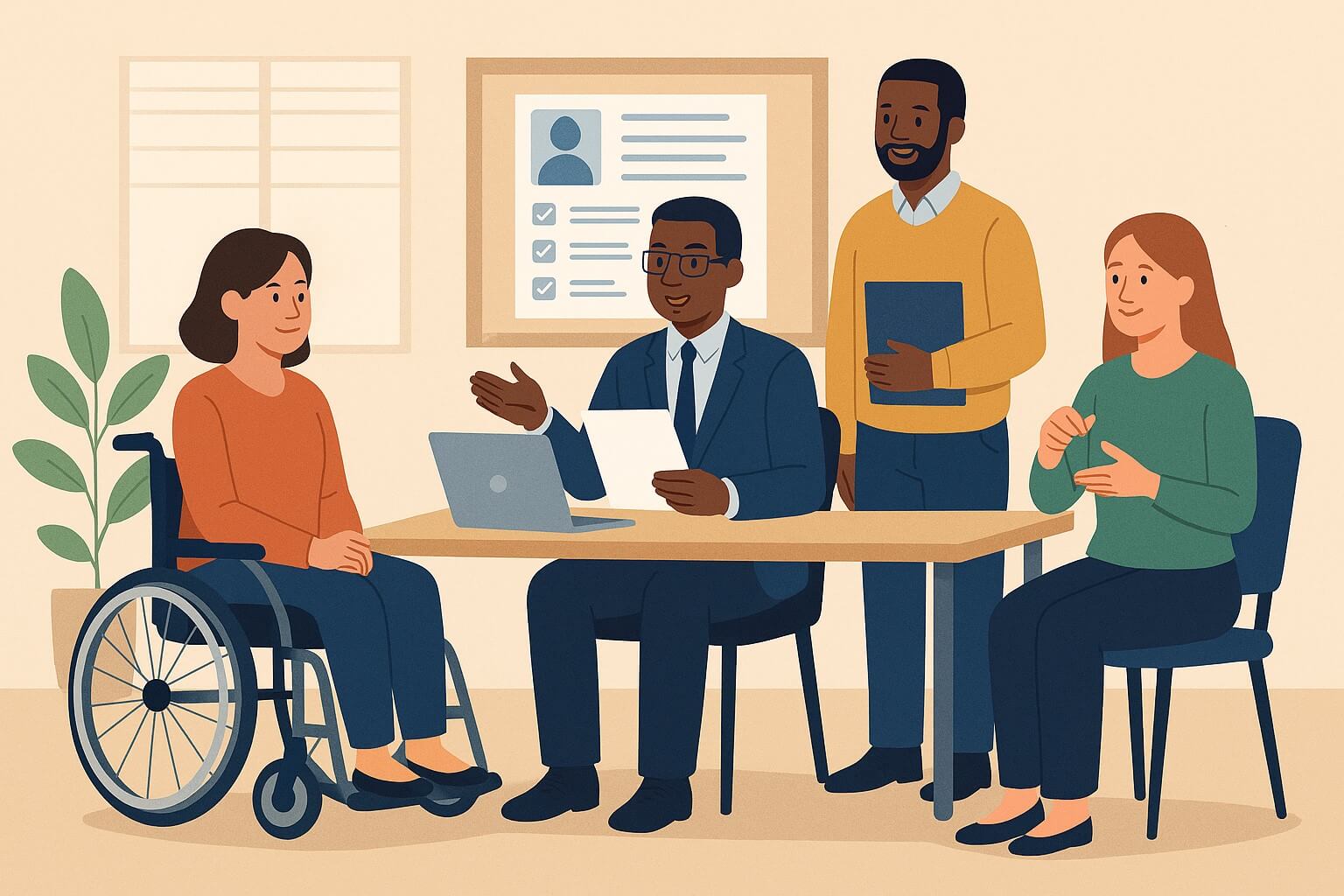
Building a truly inclusive workforce starts long before the first day on the job. Employers have the power to reshape hiring practices so people of all abilities can thrive. Here’s how you can do better—and why it matters.
Creating an inclusive workforce isn’t just the right thing to do—it's good business. People with disabilities bring diverse perspectives, strong problem‑solving skills, creativity, and resilience to the workplace that can translate into team success and accomplished goals for your business. Yet many still face barriers simply because hiring practices were not built with inclusion in mind.
At RCIL, we work every day to empower individuals with disabilities to pursue meaningful employment. But true inclusion requires employers to rethink how they recruit, interview, onboard, and support talent. Here’s how employers can do better—and build workplaces where everyone can succeed.
1. Rethink the Job Description
A job posting is often the first barrier.
Many employers unintentionally exclude qualified candidates by including requirements that aren’t essential—like unnecessary lifting requirements, driver's license requirements, or jargon-heavy task lists.
More inclusive job descriptions should:
- Focus on essential job functions
- Avoid phrases like “must be able to…” unless required
- Highlight willingness to provide workplace accommodations
- Use plain, accessible language
- Encourage applicants of all abilities to apply
- A clear, inclusive job posting widens your talent pool and signals that your organization values diversity.
2. Make the Application Process Accessible
If applicants can’t access your career page or application, you’re missing out on great candidates.
Employers can improve accessibility by:
- Ensuring online applications meet WCAG accessibility standards
- Offering multiple ways to apply
- Avoiding timed tests or CAPTCHA tools that may block access
- Providing a contact person for workplace accommodations
3. Train Hiring Managers on Disability Inclusion
Even well‑intentioned employers can unintentionally make assumptions during interviews.
Training should include:
- How to ask questions that focus on skills, not disability
- Understanding what is and isn’t appropriate to discuss
- Recognizing and avoiding implicit bias
- Knowing how reasonable workplace accommodations work
4. Make Interviews Accessible and Flexible
Interviews are often designed with a “one‑size‑fits‑all” approach. But candidates may need workplace accommodations, such as:
- Extra time
- A quiet room
- An interpreter
- Accessible meeting spaces
- Alternate interview formats (virtual, written, practical demonstrations)
5. Focus on Skills and Strengths
Employers should evaluate candidates on what they can do, not assumptions about what they cannot.
This means:
- Prioritizing competencies and strengths
- Offering skills demonstrations when appropriate
- Considering diverse ways people complete tasks
- Recognizing that innovation comes from diverse experiences
6. Provide Clear Onboarding and Support
Effective inclusion includes:
- Accessible orientation materials
- Clear expectations and communication
- Willingness to provide reasonable workplace accommodations
- A welcoming team culture
- Regular check-ins to ensure success
7. Build a Culture of Inclusion
Policies are important, but culture drives loyalty and performance.
Inclusive workplaces:
- Celebrate disability as part of diversity
- Encourage open conversation and collaboration
- Include disability representation in DEI initiatives
- Provide ongoing training on accessibility and inclusion
- Promote opportunities for advancement
When employers embrace inclusive hiring practices, everyone wins—businesses, communities, and individuals alike.
Have you ever had difficulty applying for a job because of accessibility limitations? What could have done better? Do you need help creating accessible job descriptions or ensuring your interview process is inclusive? RCIL is here to help.